
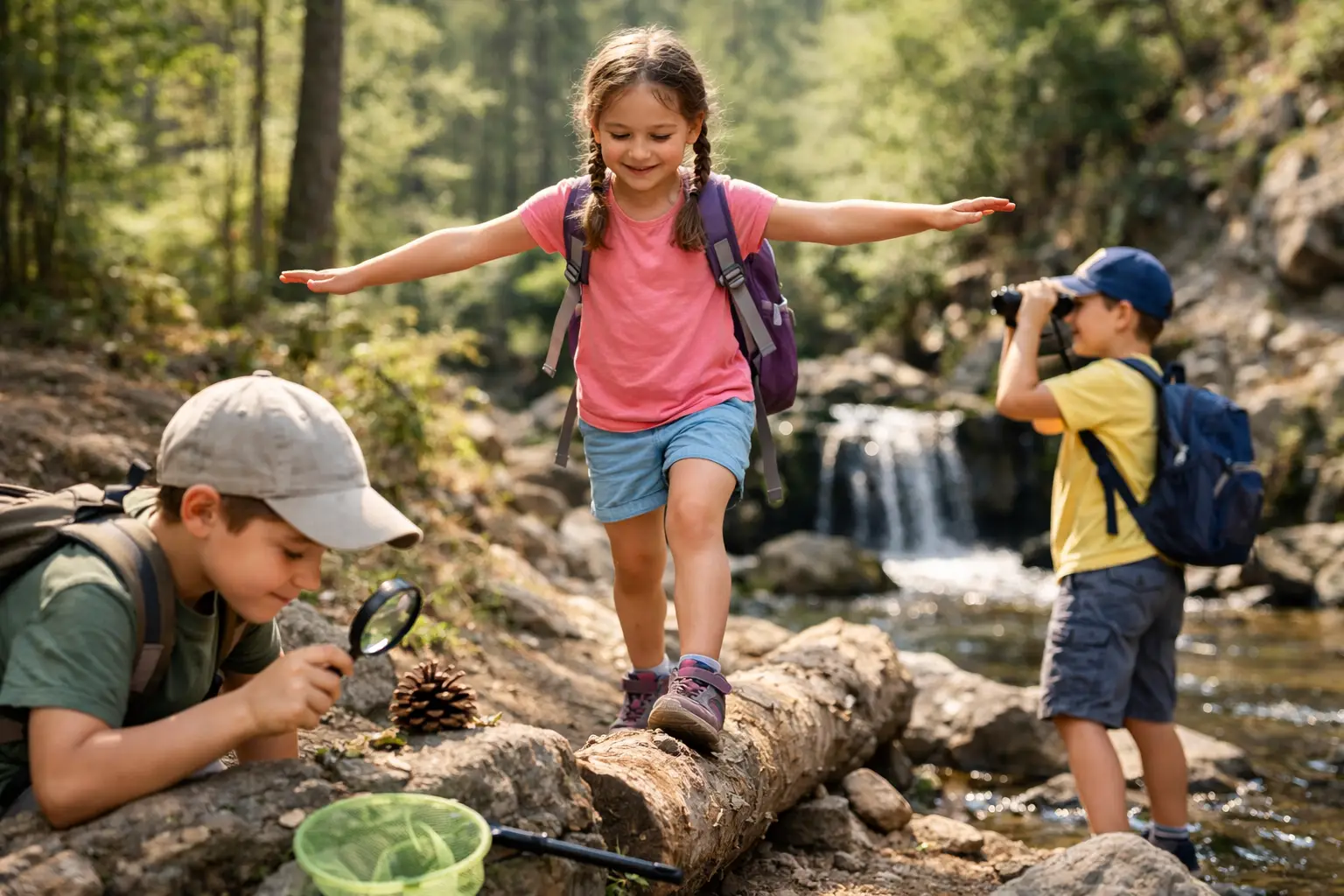
A dry wash twists ahead. A hawk circles above the ridge. There may not be a hidden mine or a mysterious creature waiting beyond the next bend, but safe hiking activities for kids can make an ordinary trail feel like the opening scene of a real investigation.
The secret is not turning a hike into a race or packing every minute with entertainment. It is giving young explorers a mission while adults quietly manage the details that keep the mission safe. A good family hike has room for wonder, clear boundaries, and a plan for when the weather or trail changes its mind.
Start Every Expedition With a Safety Briefing
Before anyone steps onto the trail, gather the crew for a two-minute briefing. Keep it simple enough that kids can repeat it back. Identify the trail leader, the sweep adult at the back, the turnaround point, and the rule that nobody goes ahead of the leader or behind the sweep.
In desert country, this talk matters even more. A trail that feels pleasant at 9 a.m. can become dangerously hot by lunchtime. In mountain country, weather can change quickly, and a harmless-looking creek can rise after rain. Check the forecast, choose a route that fits the youngest hiker’s ability, and tell someone where you are going and when you expect to return.
Each child should know what to do if separated: stop immediately, stay where they are, make noise, and wait for an adult. No wandering off to search for the group. A whistle is often more useful than shouting, and three blasts is an easy signal for help.
Adults should carry more water than expected, salty snacks, sun protection, a small first-aid kit, a map, a charged phone, and a backup power source. For longer or more remote routes, add a flashlight or headlamp and warm or rain layers. Kids can carry lightweight personal gear, but do not let a loaded pack turn the adventure into misery.
1. Become Trail Detectives
A trail is full of clues, even when it looks quiet. Ask kids to search for signs that tell a story: tracks in soft dirt, feathers, seed pods, scat, gnawed branches, animal calls, or a patch of freshly disturbed ground. The goal is observation, not collection.
Give each investigator a small notebook and ask them to record three clues. What did they see? Where was it? What might have made it? A child who notices a lizard trail or a woodpecker’s work is learning to slow down, look closely, and ask better questions.
Keep a respectful distance from wildlife and never touch bones, scat, nests, or unfamiliar plants. In places with rattlesnakes, teach kids to look where they place hands and feet, especially near rocks, brush, and logs. Curiosity is welcome. Reaching into hidden spaces is not.
2. Run a Color and Shape Hunt
A color hunt works beautifully for younger hikers because it requires no special equipment and does not pull attention away from the path. Challenge the group to find something red, silver, yellow, purple, round, jagged, and shaped like a letter of the alphabet.
The important rule is that every discovery stays where it belongs. Take a photo or sketch it instead of bringing it home. Wildflowers feed pollinators, rocks help shape habitats, and old objects may be historical artifacts. Even a rusted can or faded piece of metal near an old site can be part of a larger story.
For older kids, make it tougher. Can they find five shades of brown in the desert? Can they spot natural patterns that resemble a map, an animal face, or a mysterious symbol? The landscape starts to feel less like empty space and more like evidence.
3. Map the Route Like a Search Team
Hand kids a printed trail map before leaving the trailhead. Point out the parking area, junctions, water sources, steep sections, and turnaround point. Then let them track progress by checking landmarks along the way.
This is one of the most useful safe hiking activities for kids because it builds real navigation awareness without asking them to lead the group. A child who knows that the trail crosses a bridge before reaching the junction is less likely to panic if the view suddenly looks unfamiliar.
At each major landmark, pause for a quick question: Which direction did we come from? What feature would help us recognize this spot on the way back? Where would we go if we needed to return now? Keep the pace light, but make the lesson stick.
Never depend on a phone map alone. Batteries fade, service disappears, and screens can distract from a marked trail. A paper map and an adult who understands the route are still part of the field kit.
4. Tell a Legend at the Rest Stop
Every good expedition needs a rest stop, preferably in shade or a sheltered spot away from trail traffic. This is the time for water, snacks, and a story. Choose a local legend, a ghost-town mystery, a tale of a lost treasure, or a true piece of regional history that fits the landscape.
Do not present folklore as fact. That is part of the fun. Ask, “What parts of this story could be true?” and “What evidence would an investigator need?” Kids get the thrill of a mystery while learning that claims need clues, sources, and common sense.
If you are hiking near historic ruins, mines, or abandoned structures, make the boundary absolute: look from a safe distance. Do not enter, climb, dig, or remove anything. Old places can be unstable, and protected sites deserve respect. Some secrets are best left exactly where they were found.
5. Try a Quiet Minute Challenge
Mysteries rarely announce themselves with a drumroll. Sometimes the most surprising thing on a trail is what appears when everyone stops talking.
Pick a safe place off to the side of the path and challenge the group to stay silent for one full minute. Then compare notes. Did anyone hear wind moving through grass, an insect buzzing, water, bird calls, distant traffic, or footsteps from another hiker? Did the air smell like pine, sage, dust, or rain?
For kids who find stillness difficult, shorten the challenge to 30 seconds. The point is not perfect silence. It is practicing awareness. That same awareness helps hikers notice changing weather, approaching cyclists, wildlife, and the sounds of their own group.
6. Build a No-Trace Photo Quest
A photo quest gives kids a mission without turning the landscape into a scavenger pile. Make a short list before the hike: a twisted tree, a shadow that looks strange, a trail marker, a tiny wildflower, a rock with layers, something older than a grandparent, and evidence of water.
Use only safe, visible targets. Do not ask children to climb, cross fences, approach animals, or leave the trail for a photo. If the only way to get the picture is risky, the clue remains unsolved.
At home, kids can arrange their photos into a field report. Add the location, date, weather, and a sentence about each discovery. This turns a family outing into a memory worth revisiting, and it quietly teaches the basics of documentation used by scientists, historians, and fictional investigators alike.
7. Give Everyone a Trail Job
Kids are more likely to follow safety rules when they have a meaningful role. One can be the water-check captain, reminding everyone to drink before they feel thirsty. Another can watch for trail markers. An older child can be the weather observer, noting cloud changes or gusty wind. Rotate the roles on future hikes so every explorer gets a chance to lead in a safe way.
Avoid assigning jobs that create pressure. A child should never feel responsible for keeping the group from getting lost or deciding whether conditions are safe. Those calls belong to the adults. The best jobs invite participation while making it clear who is in charge.
When to End the Mission Early
Turning around is not failure. It is good field judgment.
Head back if anyone shows signs of heat illness, exhaustion, dehydration, worsening weather, injury, or fear that does not ease with a break. In hot conditions, warning signs can include headache, nausea, dizziness, unusual fatigue, confusion, or cool clammy skin. Stop in shade, cool down, offer water if the person is alert, and seek emergency help for severe symptoms or confusion.
A shorter hike with a happy ending beats a difficult hike that teaches kids to dread the next one. Save a little mystery for another day. The ridge, the canyon, and the unanswered question will still be there.
The Ghostly Legends Society knows that the best adventures begin with a question: What happened here? On your next hike, let your young investigators ask it carefully, notice what others miss, and return with muddy shoes, full water bottles, and a trail story that is entirely their own.
Leave a Reply