
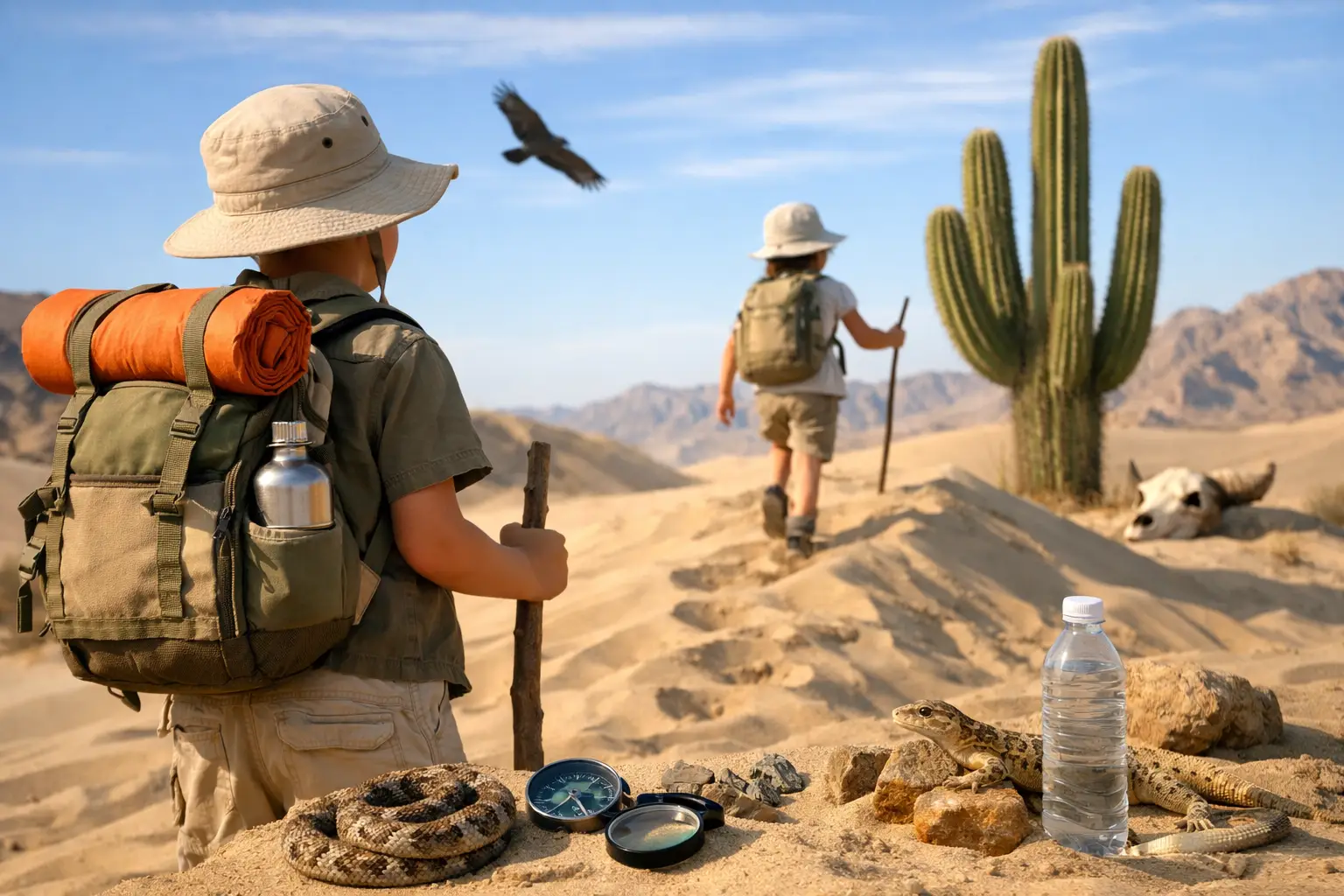
A desert trail can look empty at first. Then you notice the sun pressing down on pale rock, the thorny plants guarding every wash, and a mountain ridge that seems much closer than it really is. That is why desert survival facts for kids are not just campfire trivia. They are clues that can help young explorers understand a powerful landscape – and know when it is time to get help.
The desert is full of real wonders: ancient petroglyphs, ghost towns, hidden springs, strange tracks, and legends that refuse to stay buried. But it is not a place for solo adventures. A smart Junior Investigator explores with prepared adults, respects the weather, and knows that the best survival skill is avoiding trouble in the first place.
Desert Survival Facts for Kids: The First Rule
The first rule is simple: never head into desert country alone. Go with a responsible adult, tell someone exactly where you are going, and agree on a time to return. A quick walk near a trailhead can become confusing when every cactus and boulder starts to look alike.
Before any hike, check the forecast. Desert temperatures can climb fast, especially between late morning and midafternoon. A day that begins pleasantly cool can turn dangerous by lunchtime. Summer storms bring a different threat: rain falling far away in the mountains can send a flash flood racing through a dry wash where the sky above you is still blue.
The desert rewards curiosity. It also demands a plan.
1. Water Is More Important Than Feeling Thirsty
Thirst is a late warning, not an early one. By the time you feel very thirsty, your body may already need water. In dry air, sweat can evaporate so quickly that you do not realize how much fluid you are losing.
Drink water regularly during a hike, even if you are not thirsty. Bring more water than you think you will need, and let the adults in your group decide how much is right for the route, temperature, and length of the outing. Sweet soda and energy drinks are not good substitutes when you are hot. Water does the job best.
If water is running low, do not keep pushing toward a distant landmark because it “looks close.” Tell an adult immediately, turn back if that is the safest option, and get to shade. In the desert, a bad decision can begin with pretending everything is fine.
2. Shade Can Be a Survival Tool
Shade is not merely a nice place to rest. It can lower the heat hitting your body and give you time to cool down. A rocky overhang, a shelter, a vehicle, or the shadow of a large boulder may make a major difference.
However, not every shady spot is safe. Never crawl into a cave, narrow crack, abandoned mine, or old building to escape the heat. Mines can collapse or contain bad air, and abandoned structures may have unstable floors, nails, or wildlife inside. Choose open, stable shade where your group can be seen.
A wide-brimmed hat, lightweight long sleeves, sunscreen, and sunglasses also create a kind of portable shade. Covering up may seem strange on a hot day, but breathable clothing can protect skin from the sun better than a sleeveless shirt alone.
3. The Hottest Part of the Day Is a Bad Time to Prove Anything
In many Southwest deserts, the sun is fiercest from late morning through afternoon. Experienced hikers often start early, take breaks, and finish before the worst heat arrives. This is not quitting early. It is reading the terrain like a detective reads a clue.
If someone becomes dizzy, weak, nauseated, unusually tired, confused, or gets a pounding headache, treat it seriously. These can be signs of heat illness. Stop moving, get into shade, cool the person gradually, offer water if they are awake and able to drink, and contact emergency help or get help from adults right away.
Do not wait for someone to faint. The desert does not always give a dramatic warning.
4. Dry Washes Can Turn Dangerous Fast
A wash, arroyo, or creek bed may look like the easiest path through rough country. It can also become a trap during storms. Flash floods can arrive with shocking speed, carrying mud, branches, rocks, and debris.
Never camp, play, or shelter in a wash if rain is possible anywhere nearby. Watch the weather before leaving, and listen to adults if they say it is time to move to higher ground. If you hear rushing water or see water rising, get out of the wash immediately and climb to safer, higher terrain.
Those smooth walls and scattered driftwood pieces are evidence. Water has been there before. It can return.
5. Desert Animals Usually Want Space, Not a Fight
Rattlesnakes, scorpions, javelinas, spiders, and coyotes are part of the desert story. They are not villains waiting beside every trail. Most avoid people when given room.
The safest rule is to look, never touch. Keep hands and feet out of places you cannot see, such as brush piles, rock cracks, and holes. Shake out shoes or sleeping gear that have been left outside. Do not reach beneath rocks to investigate a sound, even if it seems like the perfect mystery clue.
If you see a snake, freeze for a moment, locate it, and slowly back away. Do not throw rocks, try to move it, or attempt a close-up photo. If a person is bitten or stung and feels sick, tell an adult at once and seek medical help. Do not try old movie tricks like cutting the skin or sucking out venom.
6. A Compass and Map Beat a Phone With No Signal
Phones are useful, but batteries die, screens overheat, and cell service can disappear beyond town. A paper map and a compass do not need a signal. Adults should know how to use them before the group begins walking.
Kids can help by paying attention to landmarks: a red cliff, a trail sign, a distant peak, or a distinctive saguaro. But be careful. Landmarks change their shape when you view them from another direction, and shadows can make familiar places look strange.
Stay on marked trails whenever possible. It protects fragile desert plants and makes it easier for rescuers to find you if there is an emergency. Wandering off trail to chase a rumor about a lost mine or a mysterious light is how a fun story gets risky.
7. If You Are Lost, Stop Making the Problem Bigger
One of the most useful desert survival facts for kids is also one of the hardest to follow: if you realize you are separated from your group, stop moving. Panic can lead you farther from the trail and burn through your energy and water.
Find safe shade nearby, stay where you can be seen, and use a whistle if you have one. Three whistle blasts is a common signal for help. Make yourself visible with bright clothing, a hat, or a signal mirror if an adult has packed one. Save your phone battery for contacting help, and do not wander around searching for a signal unless a responsible adult directs you to do so.
This is why hiking as a group matters. If someone notices quickly that a person is missing, the response can begin much sooner.
8. Desert Plants Are Not Emergency Snacks
A cactus may hold water, but that does not mean it is safe to cut open and drink from. Some plants can irritate skin, contain harmful substances, or offer far less usable moisture than adventure stories suggest. Wild berries and other plants can also be unsafe to eat.
Bring food and water from home. If an adult wilderness expert has specifically taught you about a local edible plant, that is different. Otherwise, admire desert plants where they grow. A prickly pear flower or a tall saguaro can be a clue to the ecosystem without becoming your lunch.
9. Desert Nights Can Be Surprisingly Cold
The desert is famous for heat, but temperatures can drop sharply after sunset, especially at higher elevations. A warm afternoon does not guarantee a warm night. Wind can make the chill feel stronger.
For a planned outing, adults should pack layers, a light jacket, and emergency supplies suited to the season. This matters in Arizona’s mountain deserts, where weather can shift quickly. The right gear depends on the location and time of year, which is why copying a survival scene from a book is never enough.
10. Leave Clues Behind Only for Safety
Desert places hold stories older than any modern trail. You may find pottery fragments, old cans, mining scraps, petroglyphs, animal bones, or stones that look like they belong in a museum. Take photos if it is permitted, tell a ranger or responsible adult about something significant, and leave the object where it is.
Removing artifacts destroys part of the story for everyone else. It can also be illegal. The same goes for entering ruins, mine shafts, and protected sites. Some mysteries should be investigated with your eyes, your notebook, and your imagination – not your hands.
The best desert explorers are not the ones who take the biggest risks. They are the ones who notice the clues, prepare for the conditions, and return with a story worth telling. Out there, beneath the blazing sky and the watchful mountains, smart choices are the greatest gear you can carry.
Leave a Reply