
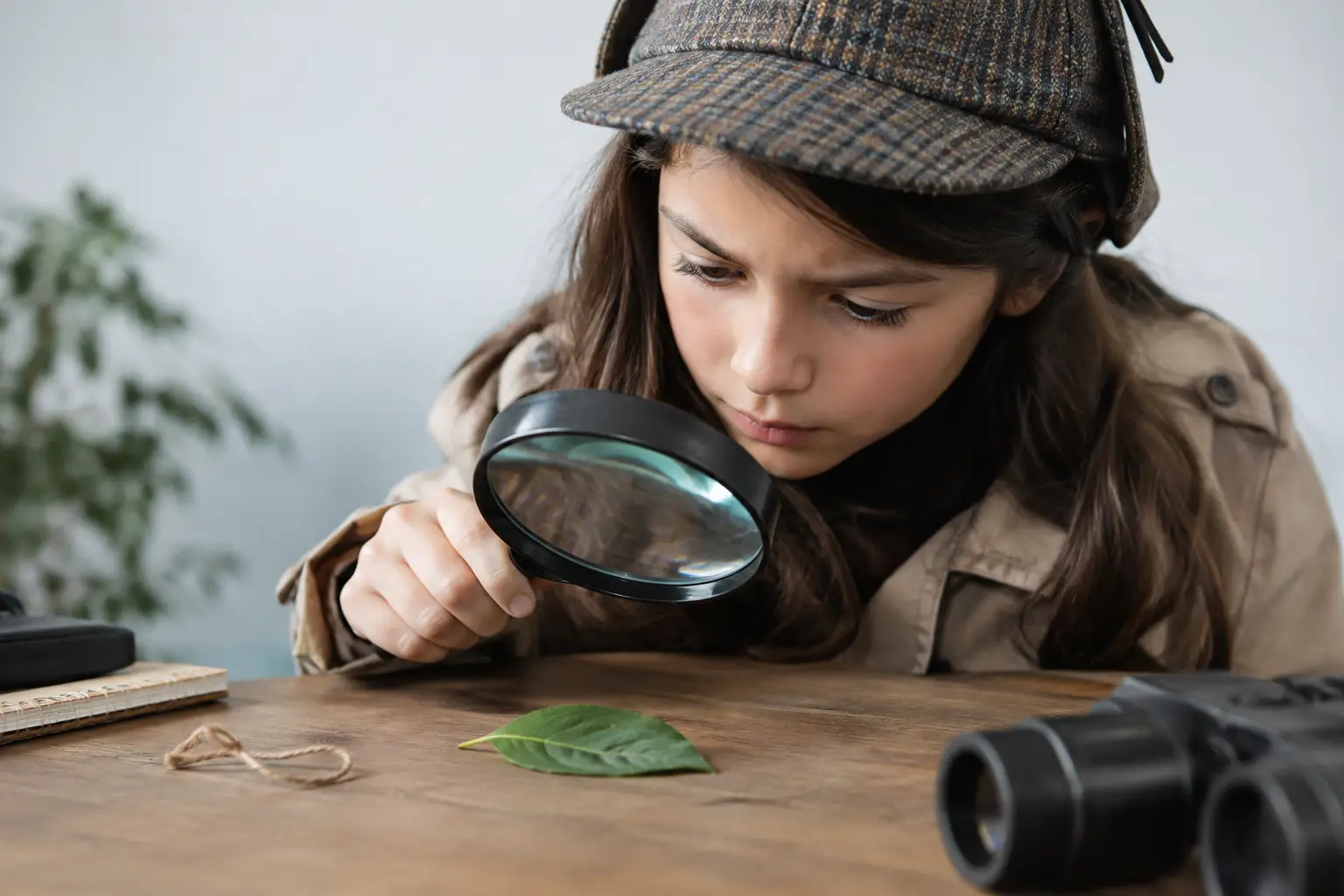
A boot print appears beside a dry wash in the Superstition Mountains. It points toward an abandoned mine shaft, then stops. No return tracks. No campfire. No obvious answer. What makes a good clue is not that it solves the mystery at once. It makes you lean closer, ask a sharper question, and wonder what happened before anyone arrived.
A great clue is an invitation. It tells readers that the truth is hiding somewhere nearby, even if the trail is crooked, dusty, or guarded by an old legend. For Junior Investigators, learning to recognize clues is part of the adventure. The best ones can turn a forgotten photograph, a strange sound in the hills, or a torn scrap of map into the beginning of a real investigation.
What Makes a Good Clue in a Mystery?
A good clue does two jobs at the same time. First, it gives the detective useful information. Second, it creates a new problem. The boot print may reveal that someone visited the wash recently, but why would they walk toward the mine and seemingly vanish? That unanswered question keeps the case moving.
Clues should feel fair. Readers do not have to spot every detail immediately, but when the answer is revealed, they should be able to look back and think, “Oh, that was there all along.” A mystery becomes exciting when the solution is surprising but not impossible.
That balance takes care. If a clue is too obvious, the case is over before the lantern runs low. If it is too hidden or depends on information nobody could have known, the ending can feel like a trick. The strongest mysteries place evidence in plain sight, then give it meaning later.
A rusty key is only a rusty key until someone notices the symbol on its handle matches the mark on an old ghost-town door. Suddenly, the object changes. It is no longer background. It is evidence.
A Clue Needs a Connection
Not every strange thing is a clue. In a desert mystery, a rattlesnake crossing the trail may be memorable, but it does not automatically point to the missing treasure hunter. A clue must connect to the central question.
That connection can be direct. A torn page from a prospector’s journal might name the last place he was seen. Or it can be indirect. A school bell ringing in an empty settlement may lead investigators to discover that someone has been using the old building after dark.
The key is purpose. Ask this: if the detective understands this detail, does it bring them closer to the truth, the person involved, or the place where something happened? If the answer is no, it may be atmosphere instead of evidence. Atmosphere matters in an adventure story, but it should not wear a fake mustache and pretend to be a clue.
A connected clue can also point in more than one direction. A scrap of red fabric caught on a cactus could belong to the missing hiker, a local guide, or someone who wants the search party to follow the wrong trail. That uncertainty gives young detectives room to think instead of simply waiting for an answer.
It Should Raise the Stakes
The best clues do not just reveal facts. They change what the investigators must do next.
Imagine finding an old map tucked inside a library book about Arizona mining towns. At first, the map seems to show a possible route to lost gold. Then the team notices that part of the route passes through land that becomes dangerous during a monsoon storm. Now the clue has created urgency. They need to figure out whether the map is real, where it came from, and whether someone else is already following it.
Stakes do not always mean danger. A clue can raise emotional stakes, too. Perhaps a faded photo proves that a character’s grandfather knew more about a local legend than he ever admitted. Maybe a voice recording captures a name everyone believed had been forgotten. The investigation suddenly matters on a personal level.
For younger readers, the most effective stakes are clear and age-appropriate: protect a historic site, find a missing friend, solve a family mystery, stop someone from damaging a place that should be preserved. The threat can feel real without becoming too frightening. A dark tunnel is suspenseful because of what might be inside, not because every shadow needs to become a monster.
Good Clues Have More Than One Layer
The first meaning of a clue is rarely its final meaning. That is where the fun begins.
A message scratched into a wall might look like a warning: KEEP OUT. Later, investigators learn that the marks are actually trail directions used by workers decades earlier. A supposedly haunted whistle in the canyon may turn out to be wind passing through a narrow rock formation. Then again, why does it only happen near the ruins after sunset?
Layered clues reward attention. They encourage readers to notice small details and reconsider what they thought they knew. Real investigation works this way. A fact can be true and still be misunderstood.
This is especially useful when a story draws from folklore. Legends often contain exaggerations, rumors, and bits of history passed from person to person. A tale of buried treasure may not lead to a chest of gold, but it might lead to evidence of a lost camp, a forgotten route, or the reason a town vanished. The legend becomes a clue itself – not a complete answer, but a trail worth following.
The Best Clues Use the Setting
A clue becomes more memorable when it could only exist in that place.
In the Southwest, the land has its own language. Flash-flood debris caught high in a tree can reveal how quickly a wash changes. Caliche dust on someone’s boots may show they walked near a certain trail. A century-old mining claim, a petroglyph-like symbol copied onto modern paper, or a water tank visible from a ridge can all shape an investigation.
Setting should not be a cardboard backdrop. It can hide evidence, preserve it, erase it, or mislead the team. Heat can make a long hike harder. Wind can cover tracks. An abandoned building can hold echoes, old records, and plenty of places for a secret to wait.
In Ghostly Legends Society adventures, real Arizona lore gives clues extra weight because readers know that ghost towns, rugged mountains, and old treasure stories did not appear from nowhere. They grew from real landscapes and real people. Fiction can add mystery, but history gives the mystery roots.
A False Clue Must Still Be Fair
Sometimes investigators follow the wrong trail. That is not a mistake if the false clue makes sense.
A red herring should have a believable explanation. Maybe the strange footprints outside the cabin belong to a wildlife researcher wearing unusual boots. Maybe a mysterious lantern in the hills comes from a night survey crew. The team was not foolish to investigate. They simply did not have enough information yet.
A weak false clue exists only to waste time. A strong one reveals something useful, even when it does not solve the main case. The researcher may know about a hidden ravine. The survey crew may have seen someone carrying an old metal box. The wrong turn still moves the story forward.
That is a useful rule for young writers and readers alike: every discovery should matter. A clue can lead to the answer, deepen the mystery, reveal character, or uncover a new route. Ideally, it does more than one.
How to Think Like a Junior Investigator
When you come across a suspicious detail in a story, do not ask only, “What is this?” Ask, “Who benefits from it being here?” and “What would change if it were missing?” Those questions can reveal whether an object, sound, note, or rumor has a larger role.
Keep an eye on details that repeat. If a particular symbol appears on a journal, a necklace, and a canyon marker, it probably deserves attention. Notice what characters avoid saying. Listen for facts that do not fit together. A witness who remembers the color of a truck but cannot remember where it came from may be hiding something – or may be protecting someone.
Most of all, stay curious. Good detectives do not assume that the first answer is the right one. They gather evidence, compare stories, and respect the difference between a guess and a fact.
The next time a mystery gives you a dusty map, an unexplained sound, or a locked door at the edge of town, pause before turning the page. Study the detail. Somewhere beyond the obvious answer, another question is waiting.
Leave a Reply