
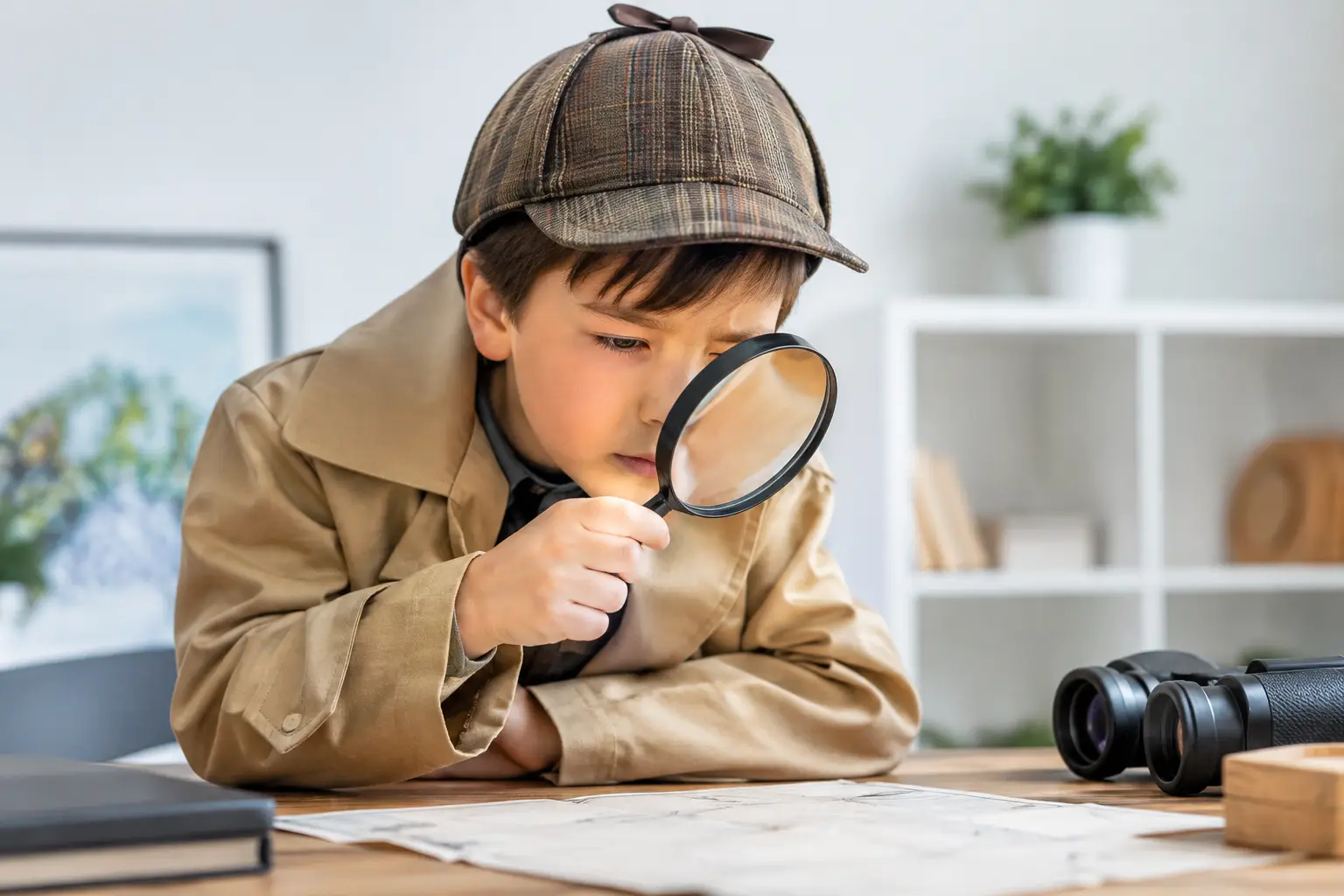
A good mystery gift does more than fill an afternoon. It gives a young investigator a reason to look closer at a strange footprint, an old map, or a whispered local legend. The best detective gifts for kids turn ordinary places into possible crime scenes, forgotten histories, and trails leading somewhere unknown.
For kids who love secrets, spooky stories, hidden treasure, and real-world exploration, the right gift says one thing: the case is yours now. Here are 12 ideas that invite curiosity without requiring a secret laboratory or a locked-room mansion.
Best Detective Gifts for Kids: Choose a Real Mission
The strongest detective gifts give kids something to do, not just something to own. Look for tools that encourage observation, note-taking, reading, research, and outdoor discovery. A flashy gadget can be exciting for a day. A gift that helps a child build their own investigation can spark dozens of adventures.
Age matters, too. Younger detectives may want simple, hands-on activities with immediate results. Older kids and teens often enjoy puzzles with a deeper story, real historical questions, or gear they can use on hikes and neighborhood expeditions.
1. A Junior Investigator Field Kit
Start with the essentials: a sturdy pouch or small case, a notebook, pencils, a magnifying glass, a ruler, and a few resealable evidence bags. There is something powerful about calling a notebook a case file. Suddenly, the marks near the garden gate are not random. They are evidence.
A homemade kit is especially memorable because you can tailor it to the child. Add a case name on the front, such as The Mystery of the Missing Map or The Backyard Footprint File. Keep it simple enough that it will actually leave the shelf.
2. A Mystery Notebook Built for Clues
A plain journal works, but a notebook with sections for suspects, observations, sketches, questions, and theories makes the experience feel official. Encourage the detective to date each entry. Real investigators need to remember what they saw, where they saw it, and whether a detail changed later.
For creative kids, leave room for newspaper clippings, leaf rubbings, trail maps, and sketches of strange symbols. The best mysteries are often built one small detail at a time.
3. A Quality Magnifying Glass
A magnifying glass is classic for a reason. It is affordable, easy to use, and instantly transforms a walk outside into an investigation. Kids can examine rock patterns, insect tracks, old coins, faded handwriting, or the weave of a piece of fabric.
Choose one with a comfortable handle and a durable lens rather than a toy version that scratches quickly. It will not reveal every secret hidden in the desert, but it teaches a vital detective skill: slow down and notice what others miss.
4. A Family-Friendly Fingerprint Kit
Fingerprints make a terrific rainy-day case. A washable ink pad, cards, tape, and a little guidance are enough for kids to compare loops, whorls, and arches. Set up a pretend mystery around the house, then let them collect and compare prints from willing family members.
The trade-off is cleanup. Choose washable materials, protect surfaces, and make the rules clear: no fingerprinting pets, siblings, or furniture without permission. A real investigator respects boundaries as much as clues.
5. A Cipher and Code-Breaking Set
Every secret society needs a code. Cipher wheels, decoder rings, invisible-ink pens, and logic-puzzle books give kids a satisfying challenge without needing a large setup. They can write messages for friends, create a treasure hunt, or decode a clue left by an imaginary ghost-town witness.
For ages 9 to 11, simple substitution ciphers and symbol codes are usually the sweet spot. Teens may prefer cryptograms, book ciphers, and multi-step puzzles that demand patience. The goal is not to make the code impossible. It is to make the breakthrough feel earned.
6. A Flashlight Made for Nighttime Clues
A reliable flashlight is a small gift with a large sense of possibility. It turns a dark hallway, backyard, campsite, or attic corner into a place where something might be waiting to be found. Look for a compact model with an easy switch and a wrist strap.
Use it responsibly. Night investigations should happen with an adult nearby, in familiar places, and never near roads, steep trails, or abandoned buildings. Mystery is more fun when everyone returns safely with a story to tell.
7. A Compass and Local Map
Some clues do not sit still. They lead into the woods, across a park, or toward an old landmark that has been hiding in plain sight. A basic compass paired with a printed local map gives kids a useful outdoor skill and a reason to learn the geography around them.
This gift becomes even better when an adult marks a few safe points of interest: a historical plaque, a creek crossing, an unusual rock formation, or a library. A map can turn familiar ground into unexplored territory.
8. Binoculars for Stakeouts and Wildlife Watching
Binoculars are perfect for young detectives who like to observe from a distance. They can watch birds, scan a trail, study architecture, or look for landmarks without trampling through sensitive areas. In a mystery game, they also make a backyard stakeout feel wonderfully serious.
Choose a lightweight pair. Heavy, high-powered binoculars can be frustrating for smaller hands, while a modest pair is easier to carry on real outings. The best gear is the gear a kid wants to bring along.
9. A Digital Camera or Instant Camera
Photography teaches investigators to document before they disturb a scene. A kid-friendly digital camera, a used point-and-shoot, or an instant camera can help them record footprints, cloud shapes, odd markings, and locations for their case files.
An instant camera adds a tactile thrill, but film costs can add up. A digital option is more practical for prolific photographers. Either way, remind kids that a blurry photograph is still useful if it captures the place, time, and question behind the mystery.
10. A Field Guide to Tracks, Rocks, or Local Legends
The most compelling mysteries often have one foot in reality. A field guide to animal tracks, desert plants, rocks, birds, or regional folklore gives a young detective context for what they find. Was that mark made by a boot, a coyote, or a bike tire? Is that strange shape a fossil, a mineral, or simply weathered stone?
Books about local history and legends can be just as valuable. They show kids that every town has old stories, vanished places, and questions no one has completely answered.
11. An Adventure Mystery Book Series
A page-turning mystery may be the best gift of all because it supplies a whole world of clues. Look for stories with capable young characters, real historical settings, and suspense that feels exciting rather than too frightening. The right book can send a reader searching for maps, researching folklore, or planning their own harmless expedition.
For readers drawn to the American Southwest, The Mystery of the Lost Dutchman’s Gold from the Ghostly Legends Society brings treasure lore, Arizona history, and young investigators together. A story rooted in real places can make the next family road trip feel like the beginning of a case.
12. A Create-Your-Own Mystery Night
Sometimes the best gift is an experience. Give a child an envelope labeled Confidential and create a mystery night around it. Include a short opening letter, three or four clues, a coded message, and a final discovery such as a favorite snack, a small prize, or the location of their next book.
Keep the mystery focused on observation and problem-solving rather than scary surprises. A missing recipe card, a misplaced museum artifact, or a map with part of the route erased can be plenty suspenseful. Let the child solve it, then invite them to design the next case for the family.
Give Them a Clue Worth Following
The best detective gifts for kids are not necessarily the most expensive. They are the ones that make a child ask another question. Who left that trail? Why is this place on the map? What happened here long before we arrived?
Put a notebook in their hands, hand them a map, and let a legend point toward the horizon. Somewhere nearby, a new case is waiting.
Leave a Reply